

Choosing paper stock
Paper changes how a printed piece looks, feels and lasts. The same artwork can look bright and punchy on gloss, calm and readable on matt, or natural and tactile on uncoated stock. Knowing the basic differences makes it easier to brief a job and compare quotes on an equal footing.
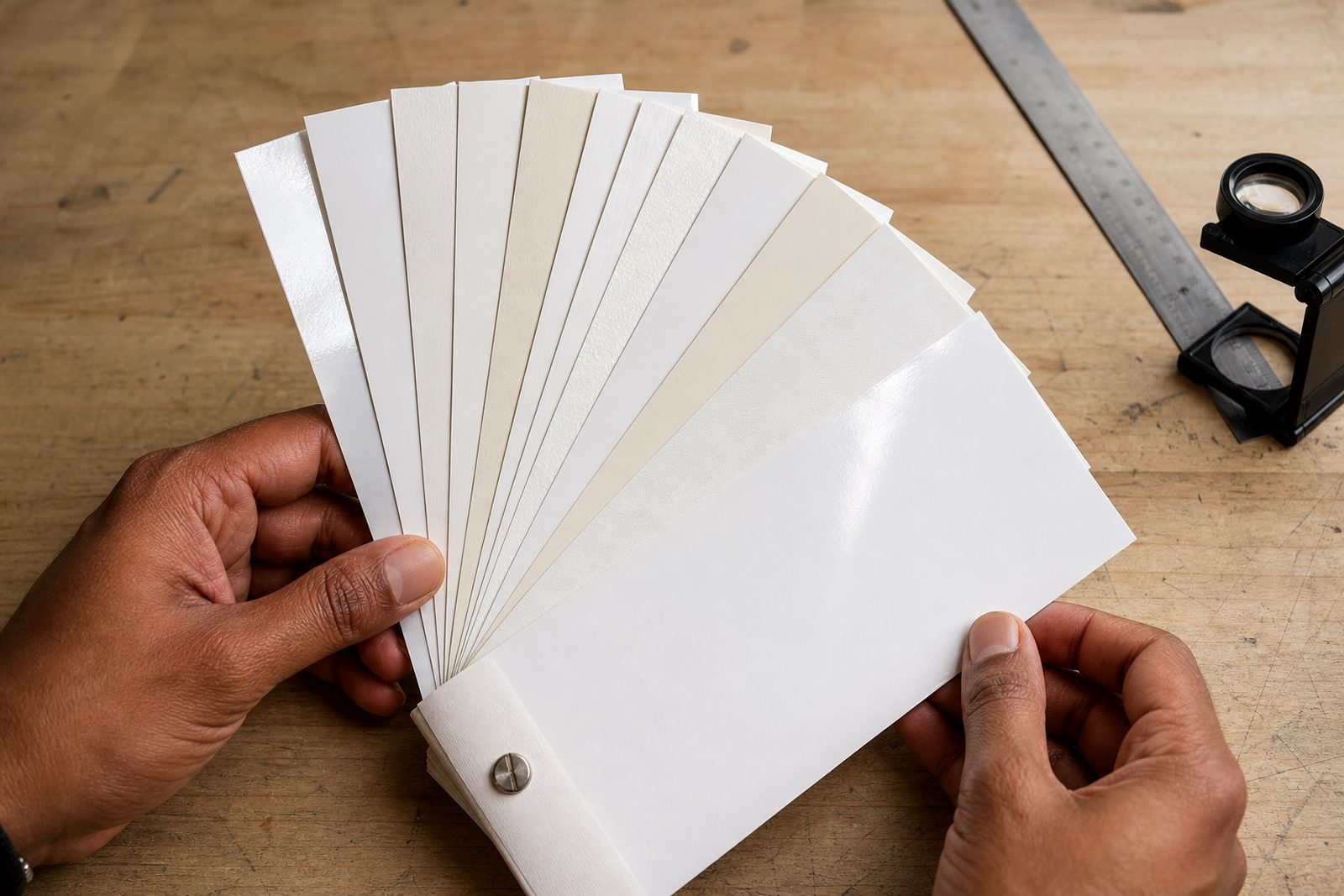
Coated and uncoated paper
Coated paper has a smooth surface layer that keeps ink sitting on top of the sheet. Colours look brighter and photographs look sharper, which is why most brochures, magazines and catalogues are printed on coated stock.
Uncoated paper absorbs more ink. Images look softer and colours slightly muted, but the sheet feels natural and is easy to write on. Letterheads, compliment slips, forms and notepads are usually uncoated for that reason.
Gloss, silk and matt finishes
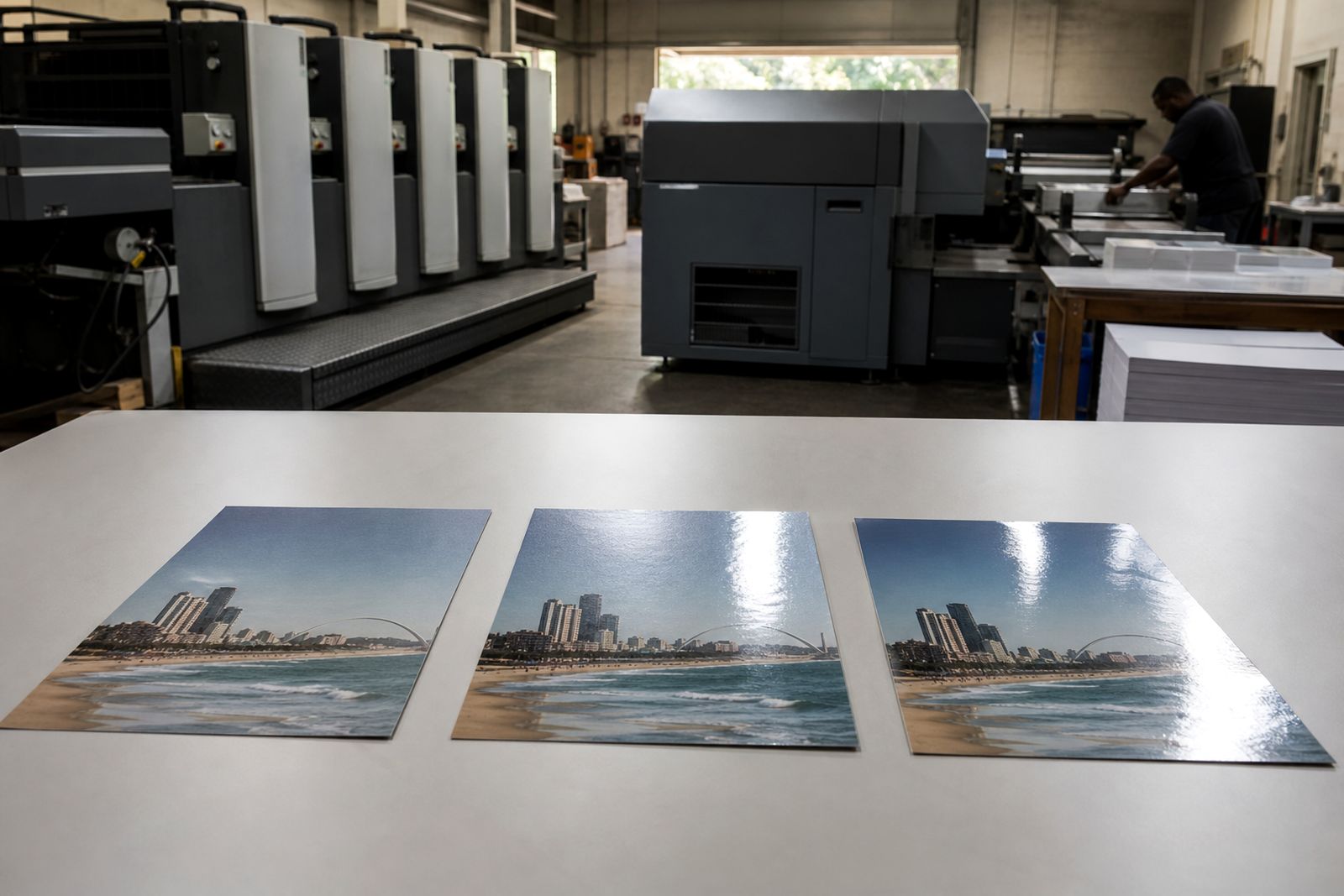
Within coated papers there are three common finishes. Each suits a different kind of job, and the choice often comes down to how much reading the piece involves.
- Gloss: high shine and strong colour, good for product promotions and image-led pieces, but glare can make long text harder to read
- Silk: a soft sheen that keeps photographs sharp while reading comfortably, the most common choice for brochures and reports
- Matt: little or no shine, calm and easy to read under office light, often chosen for annual reports and corporate documents
If you are unsure, silk is a safe middle ground for most mixed text and image work.
What paper weight means
Paper weight is given in grams per square metre, written as gsm. A higher number means a heavier, usually thicker sheet. Weight affects how a piece feels in the hand, how well it folds and what it costs to post.
As a rough guide, office paper is about 80gsm, flyers and inside pages often sit between 115gsm and 170gsm, covers move up to between 200gsm and 300gsm, and postcards and business cards to between 300gsm and 350gsm. Heavier stock on a tight fold can crack along the crease, so heavier folded work is usually scored first.
- 80gsm to 100gsm: letterheads, forms, inserts
- 115gsm to 170gsm: flyers, leaflets, brochure and magazine pages
- 200gsm to 300gsm: covers, folders, heavier brochures
- 300gsm to 350gsm: postcards, business cards, tags
Matching stock to the job
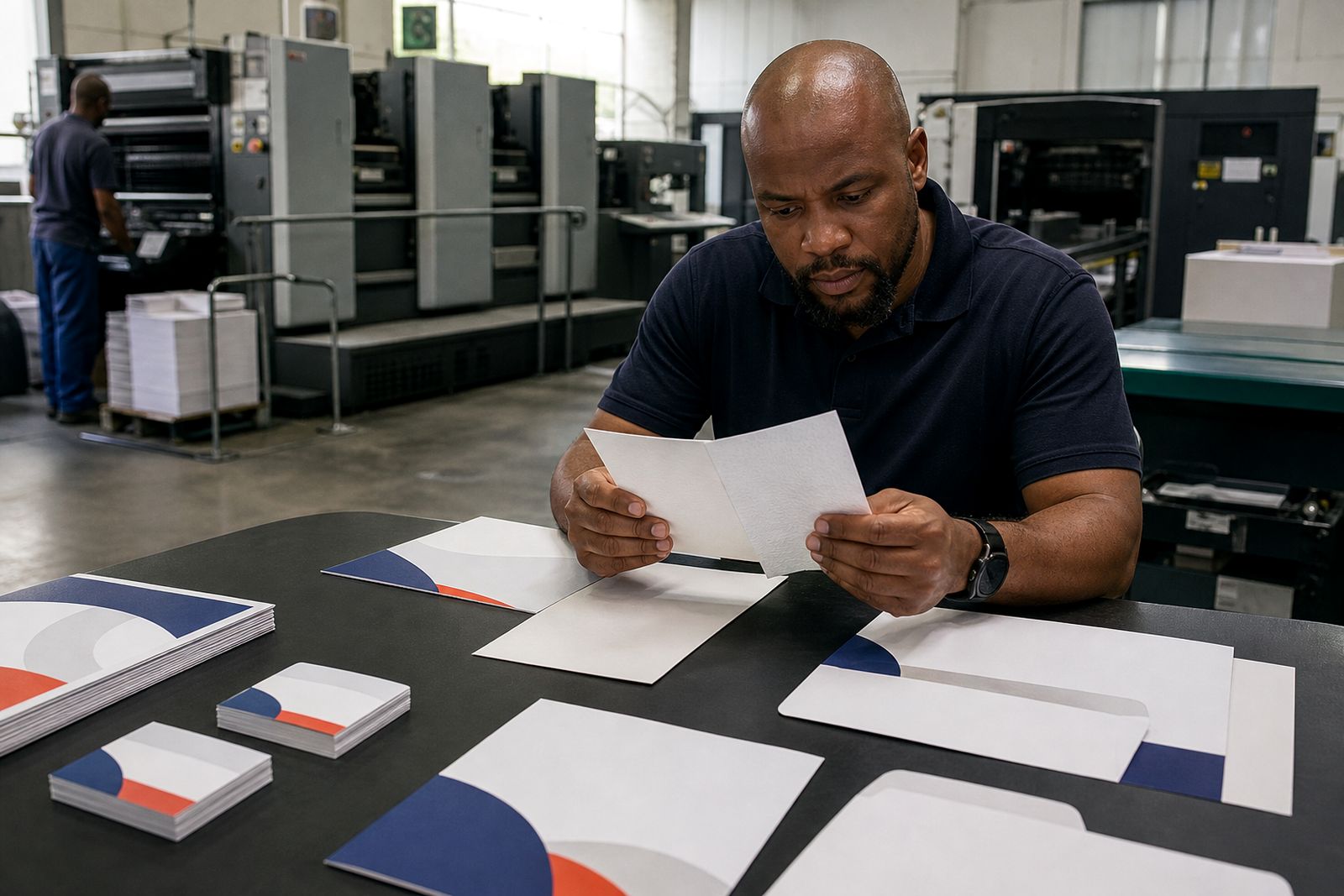
Start with how the piece will be used. A catalogue that is handled for months needs a firmer cover than a one-day event flyer. A report that people read at length suits matt or silk. A promotional piece that must stand out on a counter can carry gloss.
Think about writing, too. If people will fill in a form, sign a page or add notes, part or all of the piece should be uncoated so pens and pencils work properly.
Covers, coatings and handling
The cover takes most of the wear. A heavier cover keeps a brochure or report from curling and protects the inside pages when it is carried in a bag or passed around a meeting table.
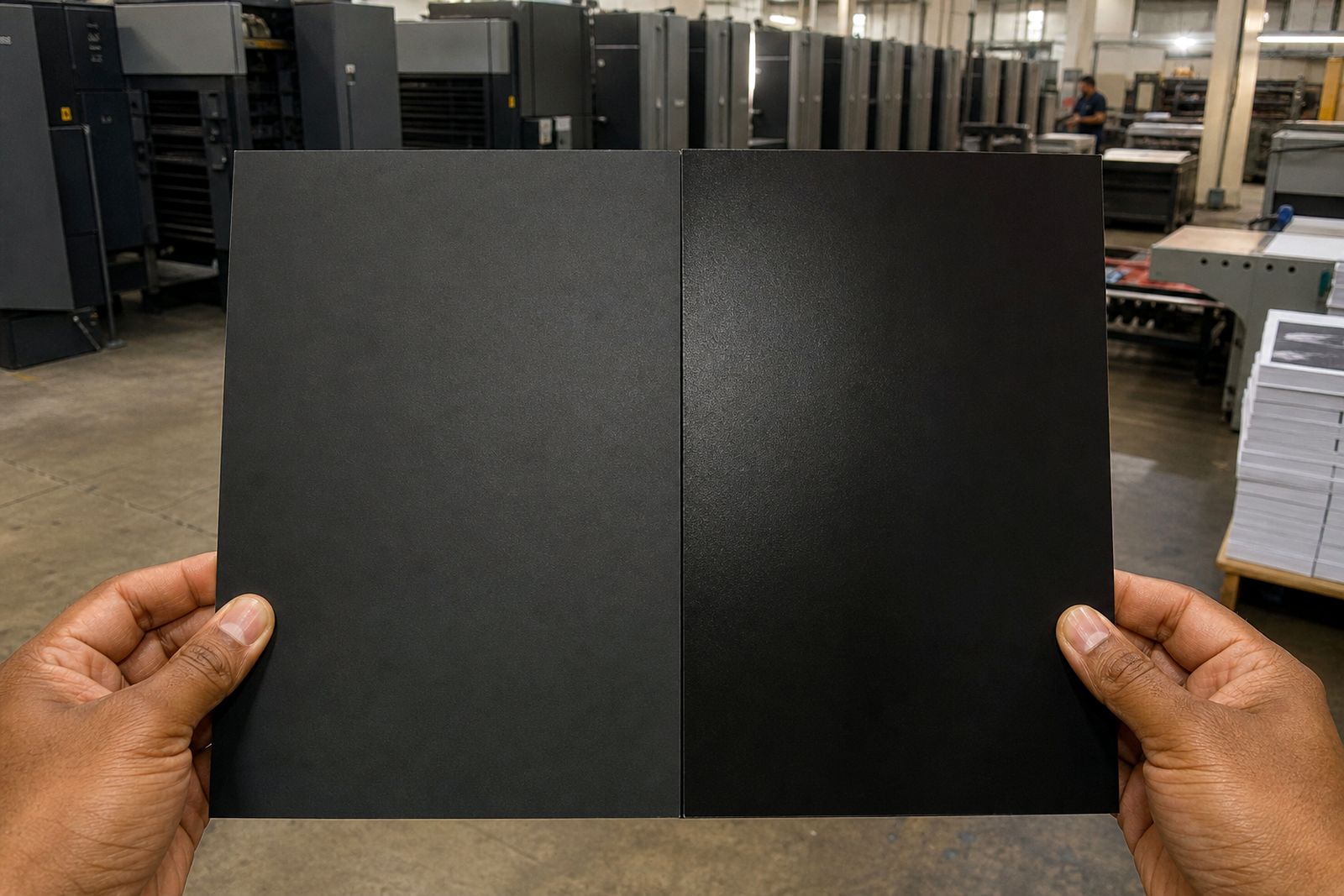
A matt or gloss laminate on the cover adds scuff resistance and helps dark colours avoid marking. Varnish is a lighter option that adds some protection and a slight sheen without a plastic film. If a document must be written on, keep the coating to the outside of the cover so the inside pages stay easy to mark.
- Heavier cover to stop curling and protect inside pages
- Laminate for scuff resistance on dark covers
- Varnish for light protection without a film
Checking before the run
Paper samples are the simplest way to decide. Holding two stocks side by side shows the difference in shine, thickness and colour far better than a screen. White papers also vary, from bright blue-white to warmer cream tones, and that shift affects how colours look.
When you send an enquiry, mention the paper type, finish and weight you have in mind, or describe the feel you want. We can then suggest a stock that suits the job and the budget.
What our commercial printing customers say
Verified Google reviews
Questions we get asked
Which paper is best for brochures?
Coated silk is the most common choice. It keeps photographs sharp and reads comfortably. Gloss suits image-led promotions, and matt suits text-heavy corporate brochures.
Why does my letterhead need uncoated paper?
Uncoated paper takes pen ink and laser printer toner well, so letters can be signed and printed in the office without smudging.
Can I see paper samples first?
Yes. Holding samples side by side is the best way to choose. Mention the job in your enquiry and we can suggest suitable stocks to compare.
Also worth a look

Ask for a quote
Send a note through the contact form with your print job, quantity, size, finish and delivery area, and the team will reply with a quote.
Open the contact form