

Brochures
Brochures are a practical way to put product, service and company information into one neat printed piece. We print litho brochures in Durban for launches, sales packs, handouts and general marketing material where colour consistency and a tidy finish matter.
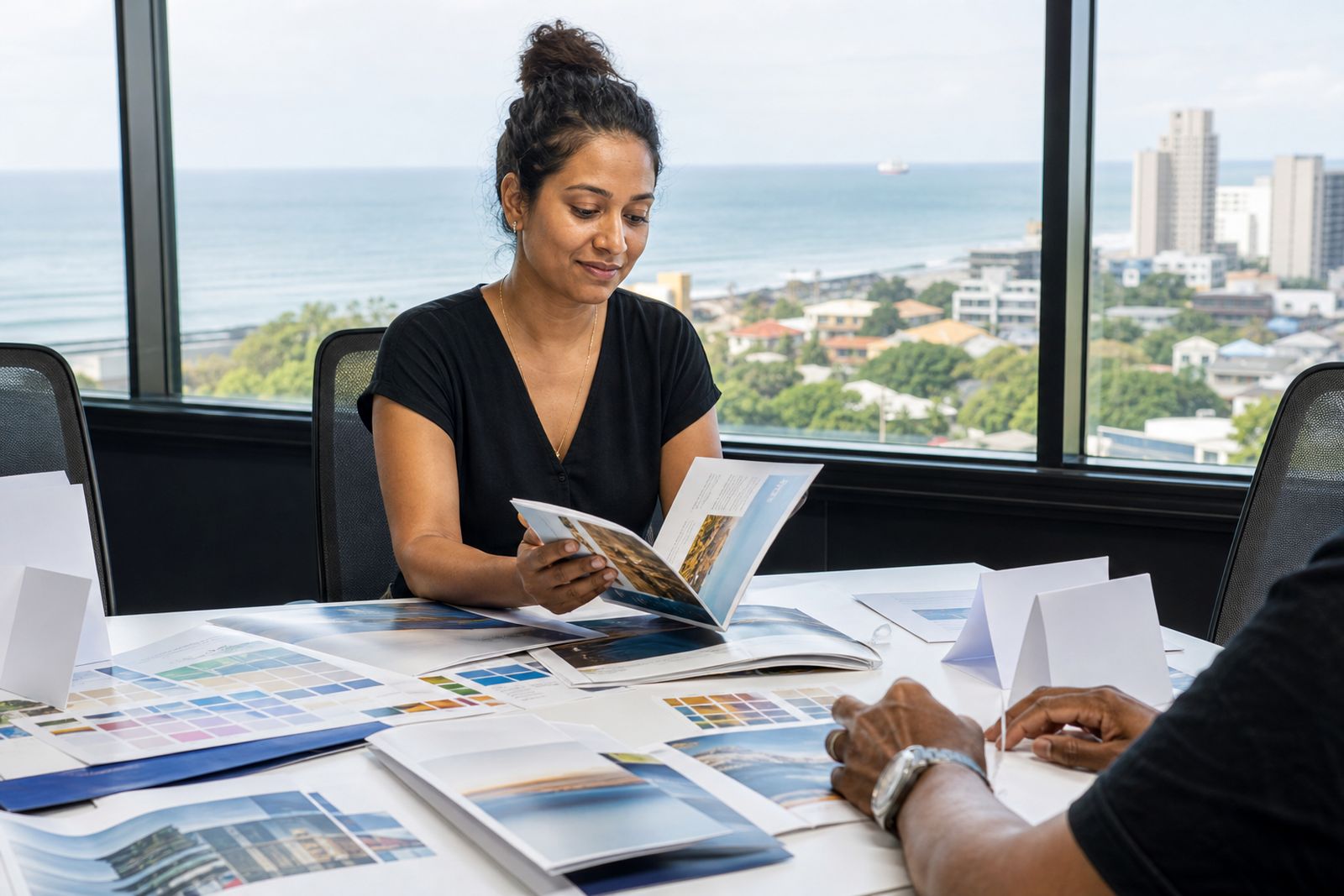
What a brochure is best used for
A brochure gives you more room than a flyer and more structure than a loose handout. It suits product ranges, service summaries, company profiles, event information, property packs and campaign literature that needs proper images and readable copy. For Durban and wider KwaZulu-Natal clients, brochures are often used at branch counters, trade events, school and college open days, municipal submissions, and sales meetings.
Litho printing works well when you need a medium run with even colour across the batch. If your brochure includes brand colours, repeated photographs, charts or blocks of solid tint, litho is usually the better route. It also helps when you need multiple pages with consistent folding and a smarter feel in the hand.
- Launch brochures for new products or services
- Sales packs and leave-behind literature
- Corporate profile brochures
- Property, tourism and hospitality handouts
- Information brochures for schools, training providers and events
Common sizes, page counts and folding options
Most brochure work is supplied flat for folding or supplied already folded, depending on how it will be used. Common finished sizes include A4, A5 and DL, with square formats available if your artwork is set up correctly. For folded work, the panel widths need to be planned properly so the inside fold sits neatly and does not buckle.
Single-sheet brochures are often produced as bi-fold or tri-fold pieces. Multi-page brochures are commonly printed as self-cover booklets or with a heavier cover, then saddle stitched. If you are choosing between formats, think about how much copy you need, whether it must fit into a pocket or folder, and how it will be handed out. A tri-fold is compact, but too much copy can make it cramped and hard to read.
- A4 finished, portrait or landscape
- A5 finished for compact sales literature
- DL finished for rack display and mail inserts
- 4 page, 6 page and 8 page folded brochures
- 8 to 32 page saddle stitched brochures, depending on paper bulk
Working limits matter. Very heavy paper on tight folds can crack, especially on dark solid colours. Very low page counts may not suit spine binding, and very high page counts may need a different binding method. If you are unsure, send the planned page count and paper preference through the enquiry form and we will guide you.
Paper choices and print specification
Paper choice changes the look and the use of the brochure. Gloss or silk coated stock gives photographs more punch and is common for product brochures and promotions. Matt coated stock gives a softer finish and is easier to read under office lighting. Uncoated stock can work for inserts or brochures that need writing space, but images will look less sharp than on coated paper.
For most brochures, text pages are chosen to balance stiffness, foldability and postage or handout weight. Covers can be the same stock as text pages for self-cover booklets, or heavier for a firmer outer wrap. Where dark cover colours are used, scoring before folding is often recommended, this helps reduce fibre cracking on the fold.
- Text pages commonly on coated stock from 115gsm to 170gsm
- Covers commonly on 200gsm to 300gsm when a heavier outer is needed
- Full colour throughout or colour outer with mono inner for some corporate work
- Optional matt or gloss coating on covers for scuff resistance
- Scoring recommended on heavier folded covers
Where brochures suit, and where they do not
Brochures suit promotional work that needs more explanation than a postcard or flyer can carry. They also suit information that benefits from sections, panels or page order, such as service steps, product categories, maps or campaign messaging. If the piece must look polished in a meeting room or reception area, brochures usually do the job well.
They are less suitable when information changes every few days, when quantities are very low, or when each copy needs different names, codes or offers. In those cases short-run digital print or variable data work is often a better fit. Very small text reversed out of dark backgrounds can also be risky in brochure work, especially on folded panels, so keep critical text clear and simple.
For venues near the coast, humidity can soften paper if cartons are left open for too long. If brochures are heading to exhibitions in Durban or coastal towns, keep them packed until needed and avoid direct sun through glass where covers may curl a bit over time.
Finishing, packing and handling on site
Finishing affects both appearance and ease of use. Fold accuracy, trimming and stitching all need to line up cleanly so the brochure opens square and panels sit properly. For sales packs, brochures can also be supplied flat if your team is inserting them into folders on site. For counter use or event handouts, folded and packed bundles usually save time.
There is no installation as such, but there are practical site needs at your side. Please make sure there is a clean, dry area to receive cartons and keep them off concrete floors where moisture can transfer. In offices and stores affected by power cuts, avoid leaving boxed print near warm backup equipment or open roller doors, as heat and damp air can mark the top and bottom copies.
- Folding for 4 page, 6 page and selected 8 page formats
- Saddle stitching for multi-page brochures
- Trimming to final size with bleed
- Bundling and carton packing for easier distribution
- Optional cover coating for added rub resistance
What to send when you ask for a quote
The more complete your brief, the quicker we can quote accurately and advise on the best format. Please use the website enquiry form and include the finished size, page count, quantity and whether the brochure is folded, stitched or flat. If you already have artwork, tell us the supplied file format and whether it includes bleed and crop marks.
It also helps to mention where the brochures will be used. A handout for an outdoor promotion in Umhlanga may need different paper and packing from a boardroom brochure going to Pietermaritzburg or Richards Bay. If colour matching is important for logos or product photography, say so early so proofing can be planned properly.
- Finished size, folded size and page count
- Quantity required
- Paper preference, if known
- Full colour or mixed colour and mono pages
- Folding, stitching or flat delivery requirement
- Required delivery timing and destination in KwaZulu-Natal
- Whether you need a proof before final print
If your files are not ready yet, that is fine. Send the brief first and we can advise on a practical specification before you upload artwork.
What our Commercial Printing customers say
Verified Google reviews
Questions we get asked
Should I choose litho or digital for brochures?
Choose litho when you need medium quantities, steady colour and a more economical result across a longer run. For very short runs or fast changes to content, digital may suit better.
Can you print brochures with dark backgrounds?
Yes, but dark solids and reversed text need careful setup. We may recommend richer black builds, slightly larger type and scoring on heavier covers to keep folds neat.
What files should I upload for brochure printing?
A print-ready PDF is best, set to final size with 3mm bleed, crop marks and images at suitable resolution. If you are not sure your file is ready, send the brief through the contact page first and we will advise.
Also worth a look
Ask for a quote
Send a note through the contact form with your print job, quantity, size, finish and delivery area, and the team will reply with a quote.
Open the contact form