

Catalogue printing
A catalogue has to show every product clearly and keep the colour steady from the first page to the last. We print litho catalogues for suppliers, distributors, retailers and manufacturers in Durban and across KwaZulu-Natal who need a range in print that sales teams and customers can rely on.
What a printed catalogue does well
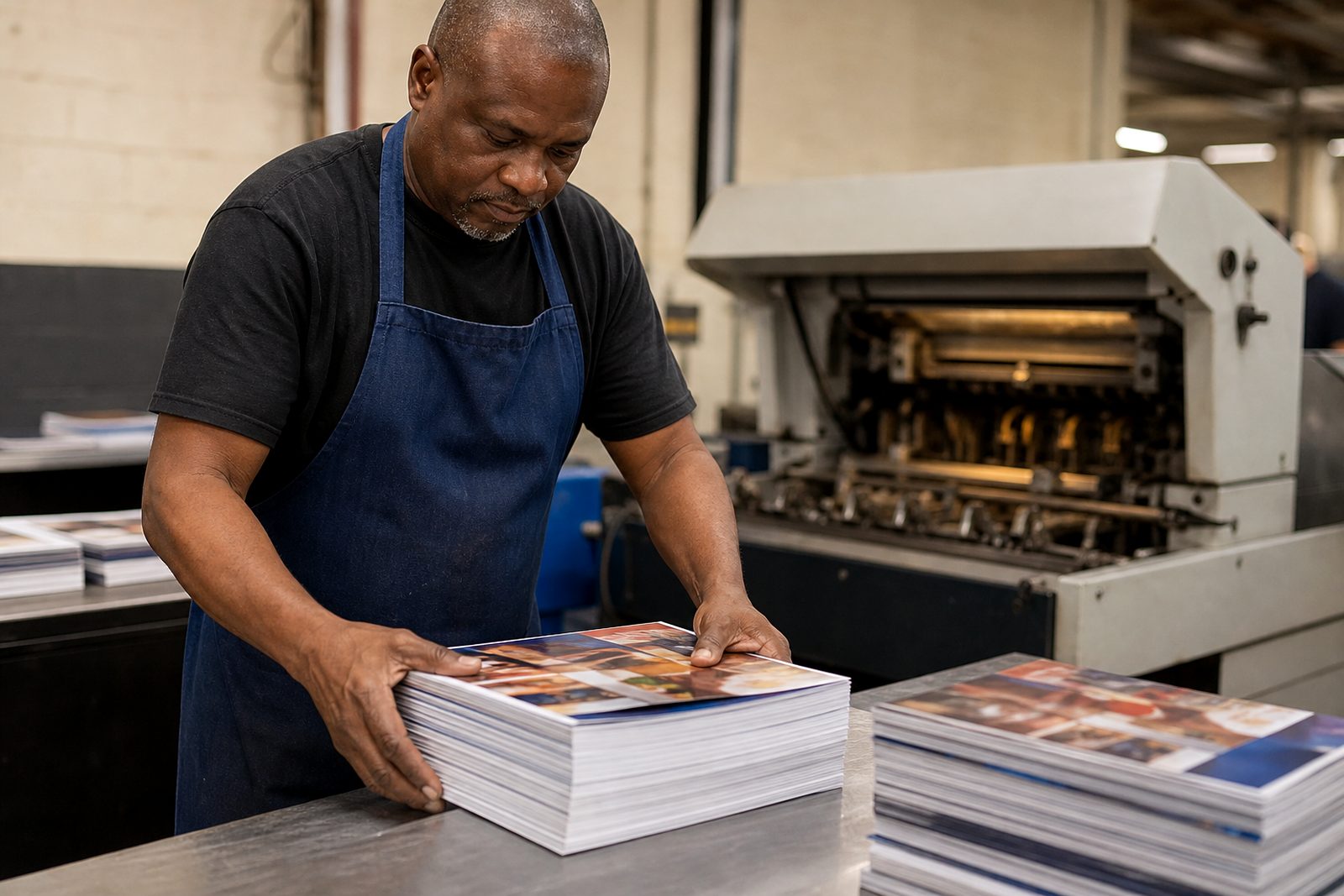
A catalogue puts a full range in one place. Buyers flick through it at a counter, mark pages for later and keep it to hand for months. Sales reps leave it behind after a visit, and trade customers use it to check codes and sizes before they order.
Because the same product photographs, brand colours and tint panels repeat across many pages, catalogues suit sheetfed litho. Colour stays even through the run, fine type stays sharp and large flat areas print cleanly. For very small quantities or a version that changes every week, digital may suit better, and we can talk through both.
Planning pages and sections
Most catalogues work best when the range is split into clear sections with a contents page near the front. Group products the way customers search for them, by category, application or size, and keep codes, sizes and pack quantities in the same position on every spread.
Page count needs planning early. Stitched catalogues run in multiples of four pages, so a 30 page layout becomes 32 with two pages for an index, notes or contact details. Larger catalogues with a square spine have more freedom but still benefit from a fixed page plan before design starts.
- Contents page and section tabs in colour so readers find a category in seconds
- Product codes, sizes and pack quantities in a consistent table on each page
- Repeated layouts for similar products so the catalogue reads evenly
- Space for an index, ordering notes or branch contact details at the back
Formats, paper and binding
A4 portrait is the most common catalogue size because it files neatly and gives photographs room. A5 suits compact trade ranges and counter use, and square formats work for lifestyle products when the artwork is set up for them.
Text pages are usually on coated silk or gloss stock so product photographs reproduce well, with a heavier cover for a firmer feel. Up to about 64 pages, depending on paper weight, saddle stitching is neat and lies reasonably flat. Thicker catalogues are better perfect bound, which gives a square spine that can carry the title and season.
- A4 or A5 finished, portrait or landscape
- Coated silk or gloss text pages for photographs
- Heavier cover, with matt or gloss laminate for handling
- Saddle stitched for slimmer runs, perfect bound for thicker ranges
Colour and photography across many pages
The hardest part of a catalogue is consistency. If one supplier photograph is warm and the next is cool, the difference shows when the two sit side by side on a spread. Ask your photographer or studio to colour match product images before layout, and use the same background tone throughout.
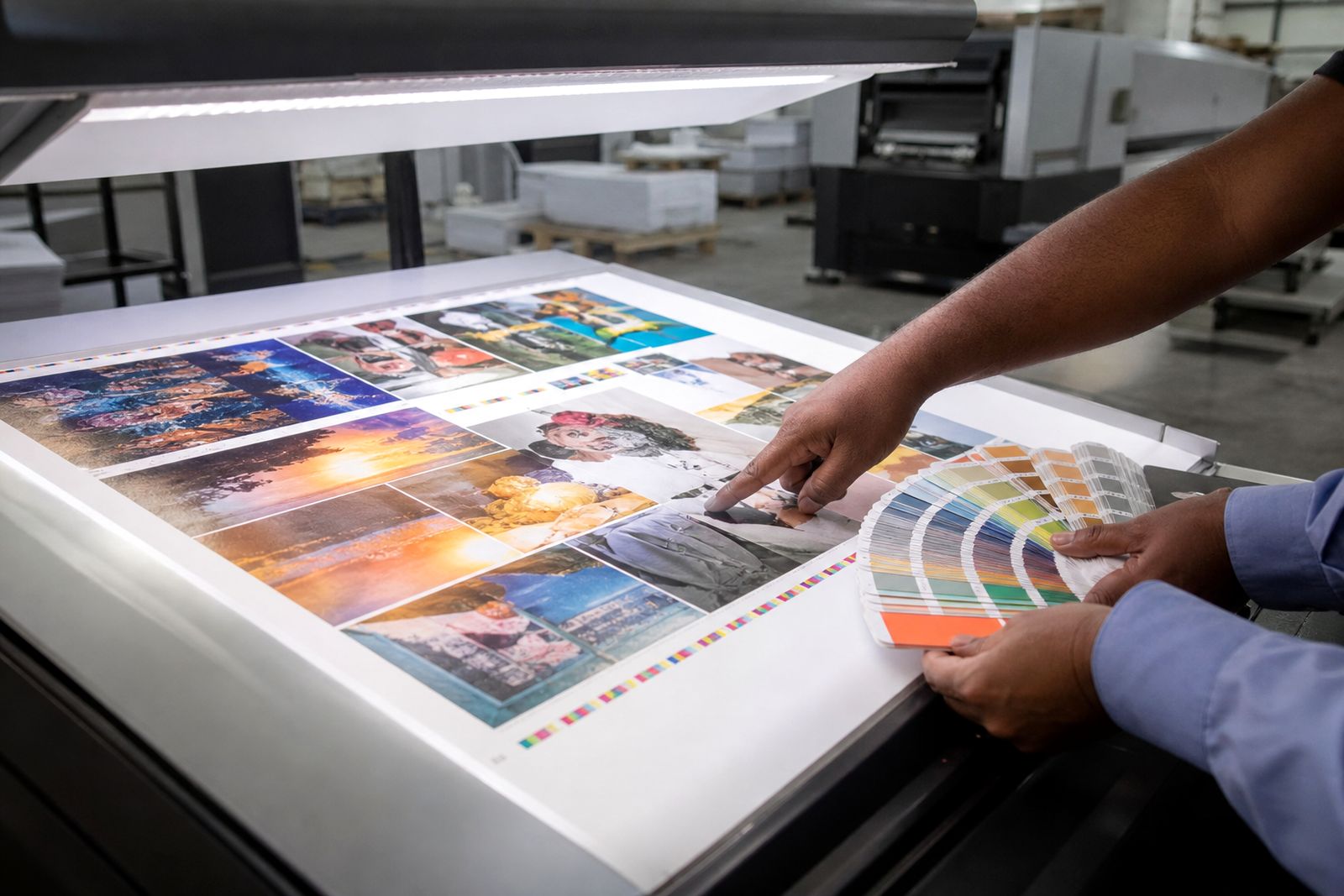
We check supplied files for image resolution, colour setup and rich black before plates are made. A printed proof of key spreads helps you judge skin tones, brand colours and product colours on the actual paper, which matters when customers order a finish or colour from the page.
Keeping the next edition simple
Most catalogues are reprinted or updated each season or year. Keep the final print files, the page plan and the paper and binding details together so the next edition starts from a known specification.
If prices or stock lines change often, many businesses print the catalogue without prices and add a separate price list or insert. That keeps the main catalogue useful for longer and leaves the shorter document to change more often.
What our commercial printing customers say
Verified Google reviews
Questions we get asked
How many pages can a stitched catalogue have?
Stitched catalogues work in multiples of four pages. Up to around 64 pages is common, depending on paper weight. Thicker catalogues are usually perfect bound.
Should prices go in the catalogue?
If prices change during the year, it often makes sense to keep them out of the main catalogue and print a separate price list or insert that can be updated on its own.
Can product colours be matched closely?
Colour matched photographs, a correct file setup and a printed proof on the chosen paper give the closest result. We point out any images that are likely to shift before the run starts.
Also worth a look

Ask for a quote
Send a note through the contact form with your print job, quantity, size, finish and delivery area, and the team will reply with a quote.
Open the contact form