

Page counts and binding
Page count and binding are linked. The number of pages decides which binding methods are possible, and the binding decides how the finished document opens, lies flat and stands up to use. Settling both early saves layout changes later.
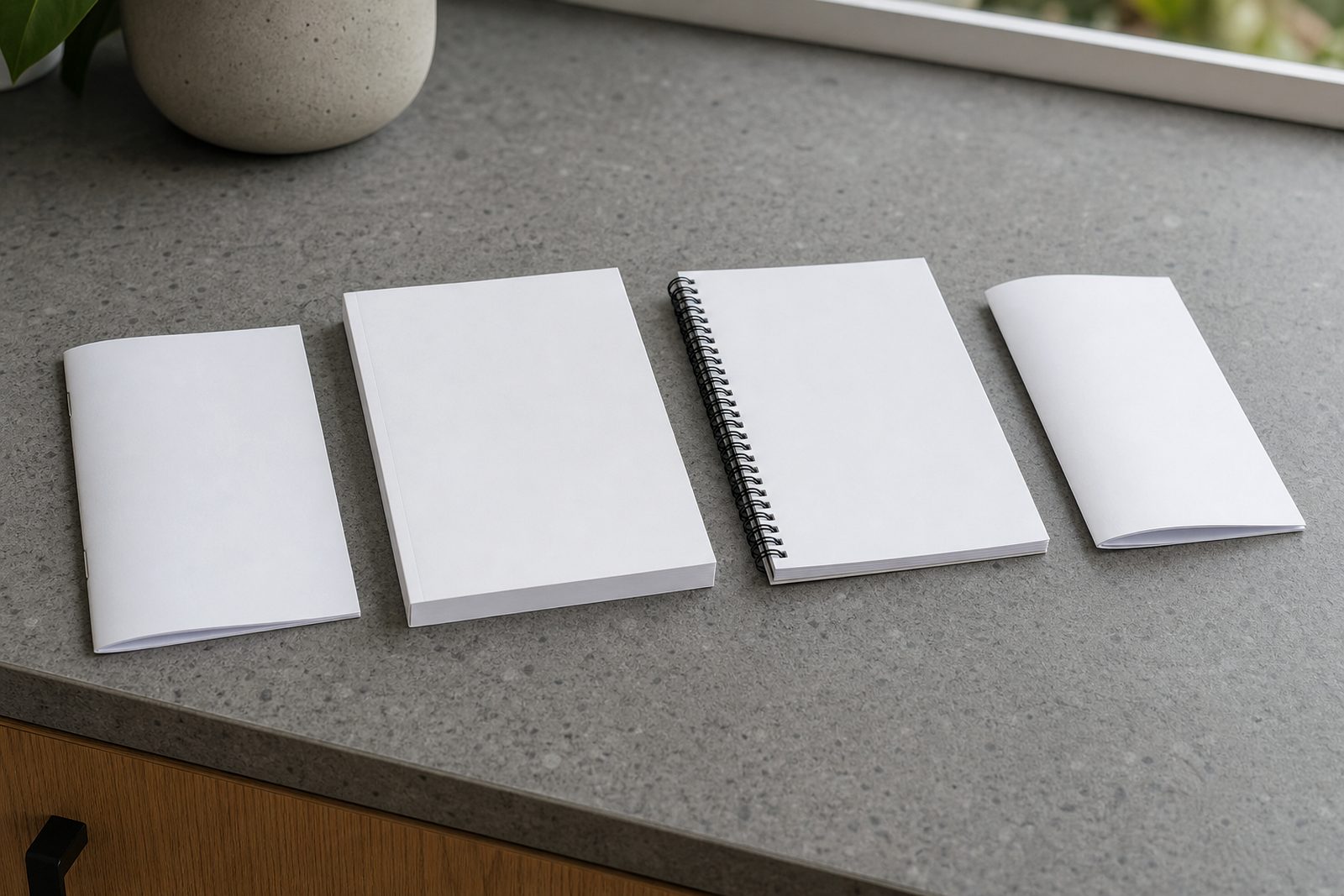
Why booklets work in fours
A stitched booklet is made from sheets folded in half and nested inside each other. Each folded sheet gives four pages, so the total page count must be a multiple of four: 8, 12, 16, 20 and so on.
If a layout comes to 26 pages, it needs to become 24 or 28. Two extra pages can carry notes, an index, a map or contact details. Cutting two pages means tighter editing. Deciding this before design starts is far easier than reworking finished spreads.
Saddle stitching
Saddle stitching fastens the folded sheets with wire staples through the spine fold. It is neat, economical and suits slimmer documents such as brochures, programmes, newsletters and smaller catalogues.
The practical limit depends on paper weight. Thin text pages allow more pages before the booklet becomes too bulky to fold cleanly. On thicker booklets the inner pages push outward slightly, a shift known as creep, which is allowed for when the file is imposed.
- Suits roughly 8 to 64 pages, depending on paper
- Page count in multiples of four
- Lies reasonably flat when open
- Self cover, or a heavier cover for a firmer feel
Perfect binding
Perfect binding glues the sheets into a wrap-around cover, giving a square spine. It suits thicker documents such as annual reports, larger catalogues and magazines with a higher page count.
The spine can carry the title, issue or year, which helps when documents sit on a shelf. Page counts are more flexible, though sections are still planned in groups of pages. Perfect bound documents do not lie fully flat, so keep important text and images away from the inner margin.
- Suits thicker documents with a square spine
- Spine can carry the title or year
- Allow a wider inner margin for the glue line
Wire binding and other options
Wire binding passes a metal loop through punched holes along one edge. The document opens fully flat and can fold back on itself, which suits manuals, workbooks, training material and reference guides.
Loose-leaf documents in a ring binder or presentation folder suit material that is updated page by page. Folded leaflets with no binding suit short information that fits on one sheet.
Planning the layout around the binding
Binding affects the artwork as well as the finished feel. On stitched booklets, the centre spread prints across one continuous sheet, so images can run across it cleanly. On perfect bound documents, some of the inner margin disappears into the spine, so images that cross a spread need care and text needs a wider gutter.
Covers need planning too. A perfect bound cover includes the spine width, which depends on the final page count and paper weight. The cover artwork is finalised once those are confirmed, so it helps to settle paper and pages before the cover design is signed off.
- Stitched: centre spread prints on one sheet
- Perfect bound: wider inner margin and care with images across spreads
- Spine width depends on page count and paper weight
Choosing for the way it will be used
Ask how readers will handle the document. A programme handed out at an event suits stitching. A report kept for the year suits a square spine. A manual that must lie open suits wire binding.
When you send an enquiry, include the planned page count, finished size, paper preference and how the document will be used. We can confirm which binding methods suit and point out any page count adjustments before artwork is finalised.
What our commercial printing customers say
Verified Google reviews
Questions we get asked
My booklet comes to 26 pages. What now?
Stitched booklets need a multiple of four, so the layout needs to become 24 or 28 pages. Two extra pages can carry notes, an index or contact details.
When should I choose perfect binding over stitching?
Perfect binding suits thicker documents where a square spine looks better and can carry a title. Stitching suits slimmer brochures, programmes and newsletters.
Which binding lies fully flat when open?
Wire binding opens fully flat and can fold back on itself, which suits manuals, workbooks and training material.
Also worth a look
Ask for a quote
Send a note through the contact form with your print job, quantity, size, finish and delivery area, and the team will reply with a quote.
Open the contact form