

Postcards
Postcards are a simple way to put a clear offer, event notice or brand message into someone’s hand. Our digital printing service suits short runs that need good colour, tidy trimming and dependable turnaround for Durban and wider KwaZulu-Natal.
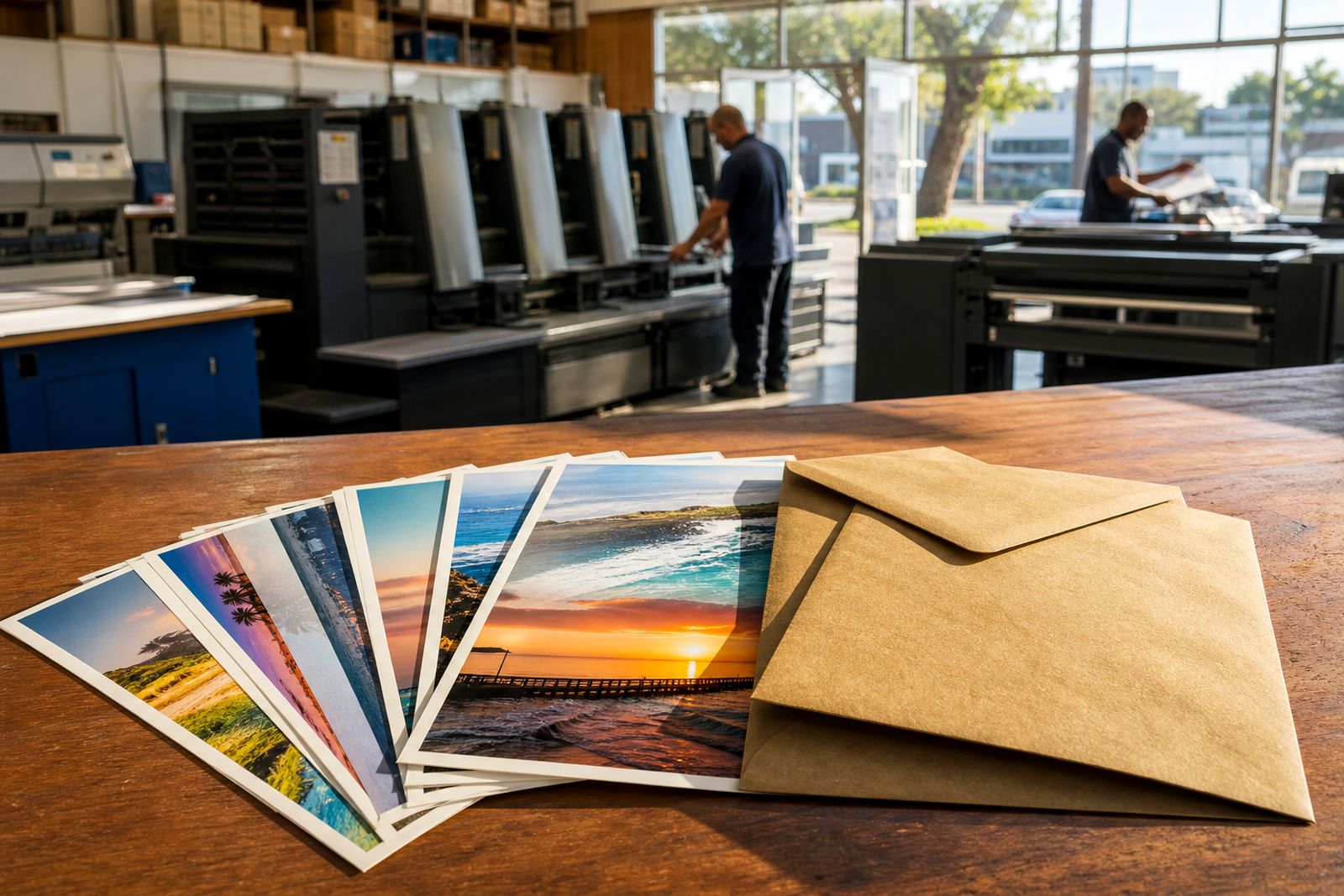
What digital postcards are used for
Digital postcards are compact printed cards, usually single sheet and heavier than a flyer, used for promotions, invitations, counter handouts, package inserts and direct mail. They work well when you need full colour on one or two sides without the setup involved in longer litho runs. For business buyers and agencies, postcards are a practical choice for local campaigns, route marketing, retail notices and event reminders.
Because the format is small, the message needs to be direct. A strong headline, one main image and clear contact details normally perform better than trying to fit a full brochure onto a card. If you need room for many product lines, tables or long copy, a leaflet or brochure is often the better route.
- Good for promotions, launch notices and reply cards.
- Useful as box inserts, counter cards and handed-out pieces.
- Suitable for short runs, test campaigns and frequent artwork changes.
- Available in full colour with optional reverse printing.
Common sizes and working limits
Postcards are usually supplied in standard trimmed sizes that post, pack and display easily. Popular options include A6, DL, A5 and square formats where the mailing method allows it. The right size depends on how the piece will be used. A6 is easy for hand distribution and inserts, while DL works well for price-led promotions and voucher-style layouts. A5 gives more room for imagery and can carry a stronger visual impact.
Digital printing handles short to medium quantities efficiently, but every size and stock has limits. Very dark solid areas can show marking on some uncoated boards, and large floods of colour near trim edges need proper bleed and careful file setup. Tiny reverse text, hairline rules and critical colour matching should be checked before print. If you want variable data such as names, codes or branch details, tell us upfront so the artwork and data file can be checked together.
- Typical finished sizes: A6, DL, A5 and selected square formats.
- Usually printed on card stocks from about 250gsm to 350gsm, depending on finish and application.
- Single-sided or double-sided printing available.
- Add 3mm bleed on all sides and keep important text at least 5mm inside trim.
Where postcards suit, and where they do not
Postcards suit campaigns where the reader only needs one clear message. They are effective for limited-time offers, opening announcements, appointment reminders, menu drops, mini maps, event invitations and thank-you cards. In Durban and coastal towns, many businesses also use postcards as bag drops, in-store takeaway pieces and inserts into delivered orders.
They do not suit every job. If the printed piece needs folding panels, detailed technical content, long-form reporting or multiple product categories, a leaflet, brochure or booklet will be easier to read. Postcards are also not ideal when the design relies on wide writable areas but uses very glossy stock, because some pens can smudge. For heavy outdoor exposure, standard postcard stocks are not intended as weatherproof signage.
- Best for short messages and one main call to action.
- Useful for direct mail where addressing or overprinting is needed.
- Less suitable for long copy, forms with many fields or reference manuals.
- Not meant for permanent outdoor use or damp handling conditions.
Paper, finish and mailing considerations
Stock choice changes how a postcard feels in hand and how the colour reads. Gloss or satin coated boards give punchy images and sharper contrast, making them suitable for retail promotions and image-heavy designs. Uncoated boards feel more natural and are easier to write on, which can help for appointment cards, response cards or pieces that need stamps and notes added after print.
If the postcards are being mailed, there are a few practical checks to make before the run starts. The final size, stiffness and addressing area should suit the postal or courier method you plan to use. If labels will be applied later, leave a clean area free of heavy ink coverage. If data will be overprinted, we need to know what machine process will be used so we can recommend a suitable surface. This sounds fussy but it prevents avoidable problems later.
- Coated stock for stronger image colour and smoother finish.
- Uncoated stock for a writable surface and a softer look.
- Optional matt or gloss lamination on selected stocks where extra scuff resistance is needed.
- Rounded corners can be considered for hospitality, loyalty or keepsake pieces.
File setup, proofing and site needs
For postcards, the main site need is not a physical installation area but good artwork control and a clear plan for packing, mailing or hand distribution. Supply print-ready PDF files at final size with bleed, crop marks only if requested, and images prepared at suitable resolution. Use CMYK artwork rather than RGB where possible, and outline or embed fonts to avoid substitution issues. If the reverse side includes addresses, barcodes or personalised fields, provide a sample showing exact placement.
Before production, check that logos are sharp, black text is set up cleanly and fine type is readable at actual size. On compact formats, copy that looked acceptable on screen can feel cramped once printed. A proof is strongly recommended where colour balance, text hierarchy or finishing positions are critical. For dark backgrounds, avoid expecting a soft-touch look from heavy ink alone because rub can occur if the stock and finish are not matched properly.
- Supply final trim size, bleed and safe area in the artwork.
- Tell us if the job will be mailed, inserted, labelled or overprinted later.
- Request a proof when colour, small text or placement is important.
- Use the website form to ask about file checks and upload guidance.
Handling, storage and what to include in your enquiry
Printed postcards should be kept flat, dry and away from direct heat. In coastal humidity, packs can absorb moisture if left open for too long, which may affect how cleanly they feed through addressing or finishing equipment. If cards are laminated, allow them to settle before heavy packing or tight strapping. During distribution, keep corners protected because compact cards can show edge knocks quickly.
When you send an enquiry through the contact page, include the finished size, quantity, printed sides, preferred stock, whether the piece must be writable, and any finishing such as lamination or rounded corners. Also note the intended use: handout, direct mail, package insert or in-store display. If you have a required delivery date for Durban or elsewhere in KwaZulu-Natal, mention that early together with whether the artwork is ready. That gives us enough to advise properly and quote on the right basis, not guesswork.
- Finished size and quantity.
- Single-sided or double-sided printing.
- Stock preference and whether writing on the card is required.
- Any special finish, variable data or mailing requirement.
- Artwork status and your needed turnaround.
What our Commercial Printing customers say
Verified Google reviews
Questions we get asked
Can postcards be written on after printing?
Yes, if the right stock is chosen. Uncoated boards are generally better for writing, while some gloss surfaces may smudge with certain pens.
Are postcards suitable for direct mail?
They can be, provided the final size, stiffness and addressing area suit your mailing method. Tell us how the cards will be posted so we can advise on stock and layout.
How should I send artwork for postcard printing?
Send a print-ready PDF at final size with 3mm bleed, clear safe margins and fonts embedded or outlined. If you need variable data or overprinting, include a sample layout as well.
Also worth a look
Ask for a quote
Send a note through the contact form with your print job, quantity, size, finish and delivery area, and the team will reply with a quote.
Open the contact form